News and Recommendations
2026-04-27 – Astro AI Lunch Talk – Towards Next-Generation Cosmic Digital Twins using Deep Learning
2026-02-05 – Conference Talk @ New Synergies in Multi-Probe Cosmology
2025-09-04 Symposium Talk @ AI4Science Symposium at the Royal Swedish Academy of Sciences
Watch on YouTube (starting at my talk)
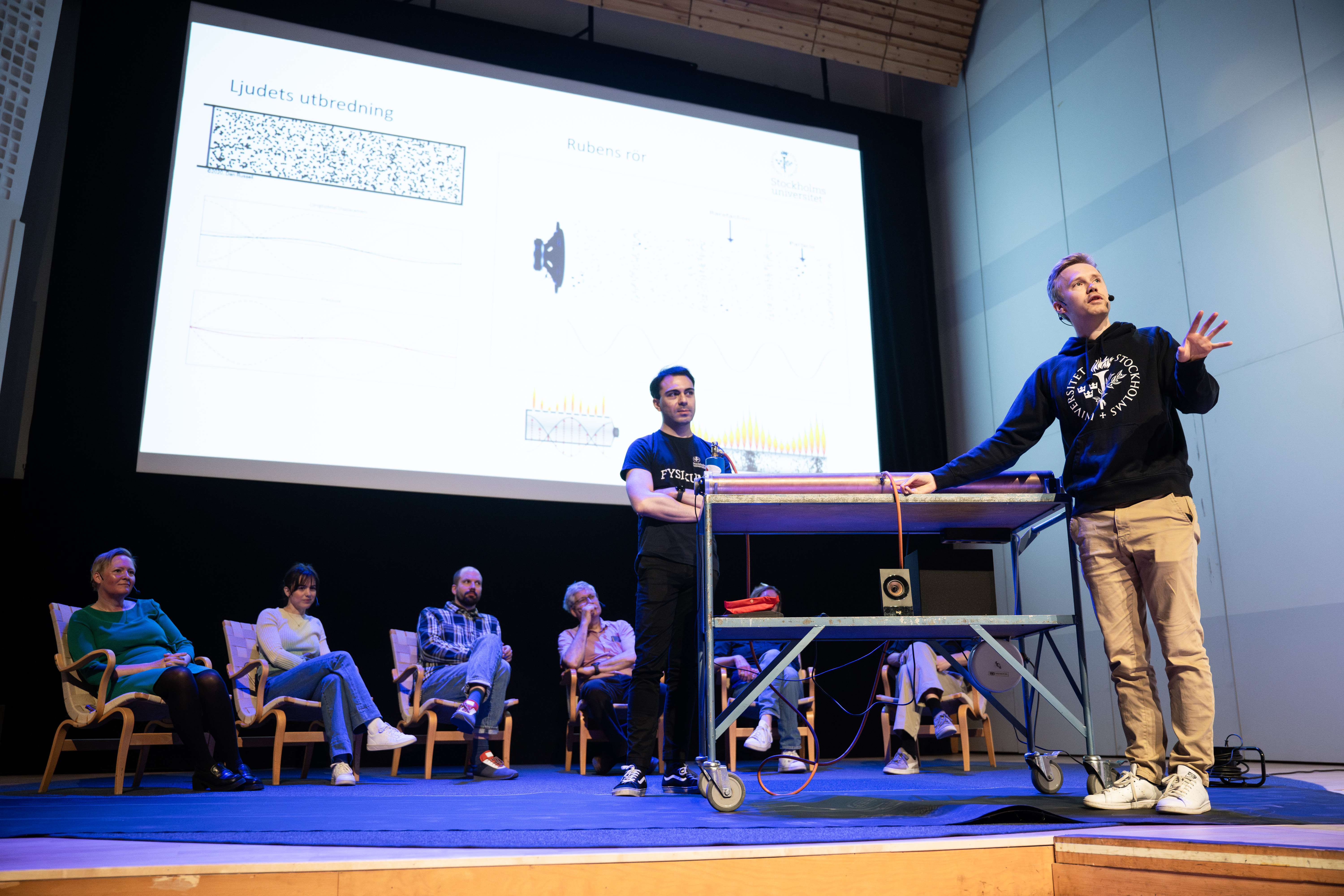
2025-05-20 – FysikShow at Aula Magna (Stockholm University) performing in front of approximately 1000 kids from 4th grade.
2025-01-26 – Explore the data-driven world of cosmology: Exciting meetings at the Institute of Astrophysics in Paris and groundbreaking research on galaxy clustering
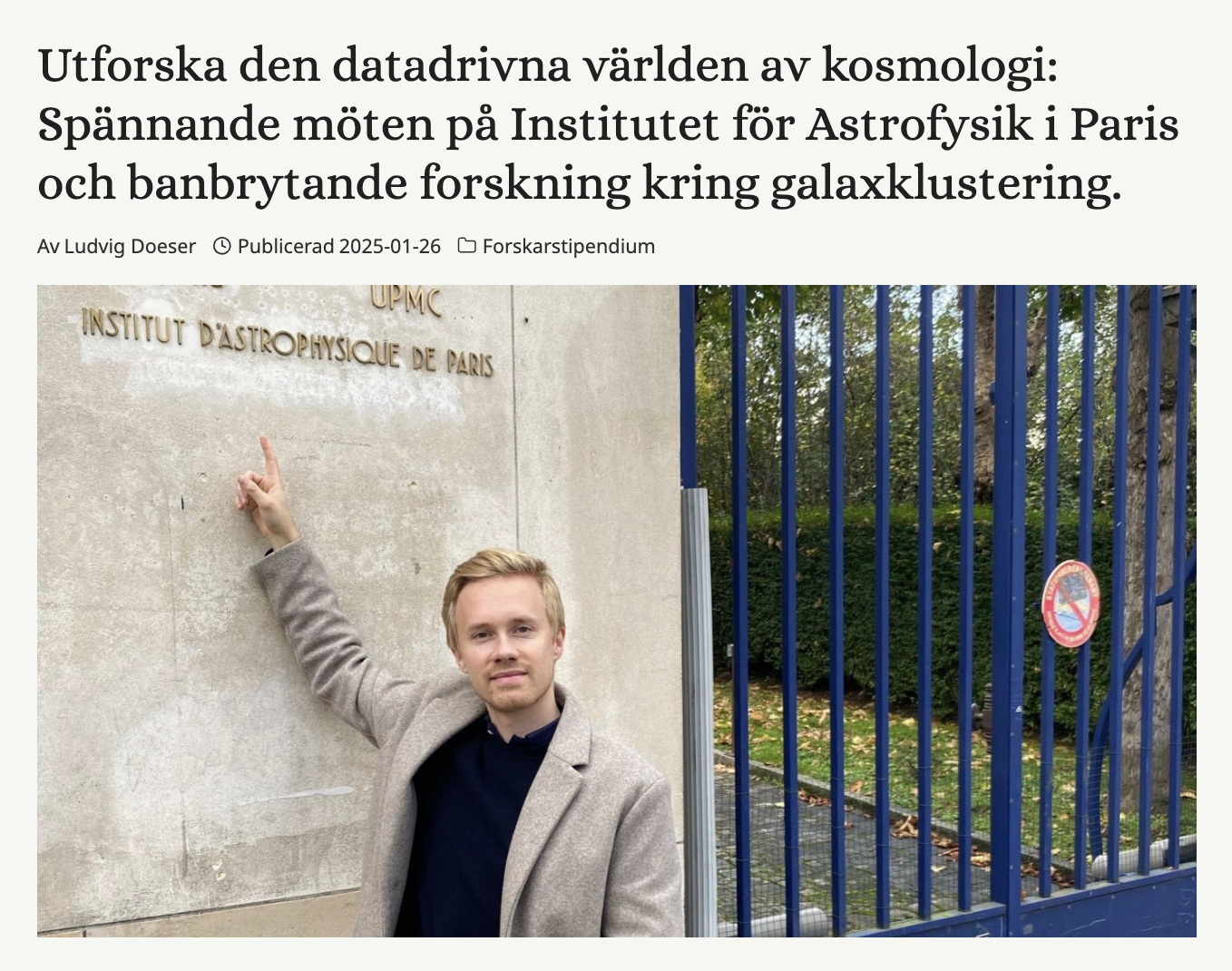
Read the article at the Swedish-French Foundation
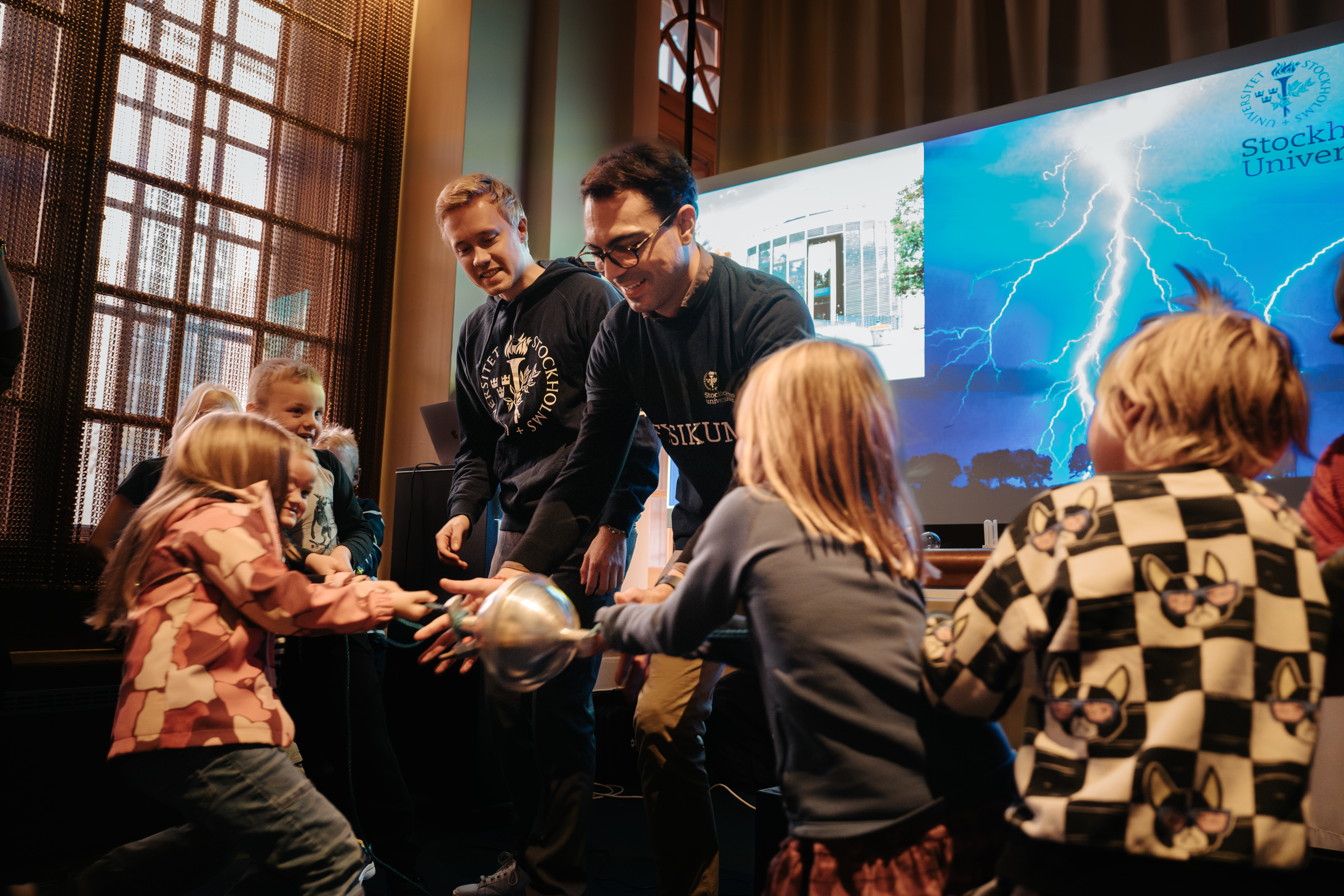
2024-11-08 – FysikShow at the Nobel Prize Museum during their family weekend.
2022-12-01 – Flying around in our Local Universe
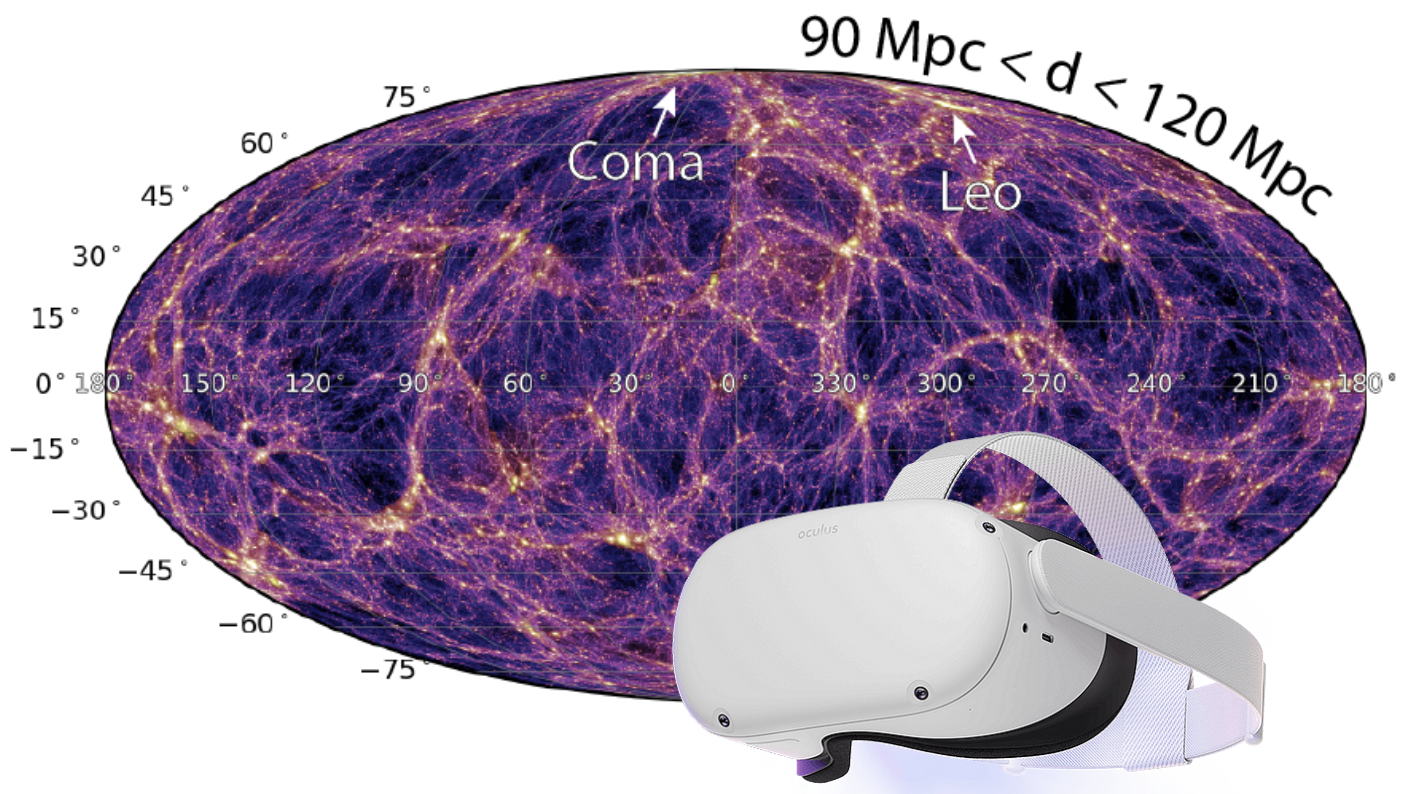 Recently, the Sibelius-dark project (McAlpine, S. et al, 2022) presented a high-resolution simulation of our local Universe. It was generated with a sophisticated N-body simulation with initial conditions generated by the BORG-algorithm taking the actual galaxy distribution in the sky as input. Thanks to lead author Dr. Stuart McAlpine (now a software engineer at Stockholm University) one can now fly around in this simulation using a VR-headset. If you're a school teacher, you can book a Fysikshow for free and we will bring the VR. Professor Carlos Frank at the Institute for Computational Cosmology, at Durham University, has said:
"It is immensely exciting to see the familiar structures that we know exist around us emerge from a computer calculation. The simulations simply reveal the consequences of the laws of Physics acting on the dark matter and cosmic gas throughout the 13.7 billion years that our universe has been around. That they are able to reproduce these familiar structures provides impressive support for the standard Cold Dark Matter model and tells us that we are on the right track to understand the evolution of the entire Universe."
2022-10-24 – Post-processing of Star Trail Images
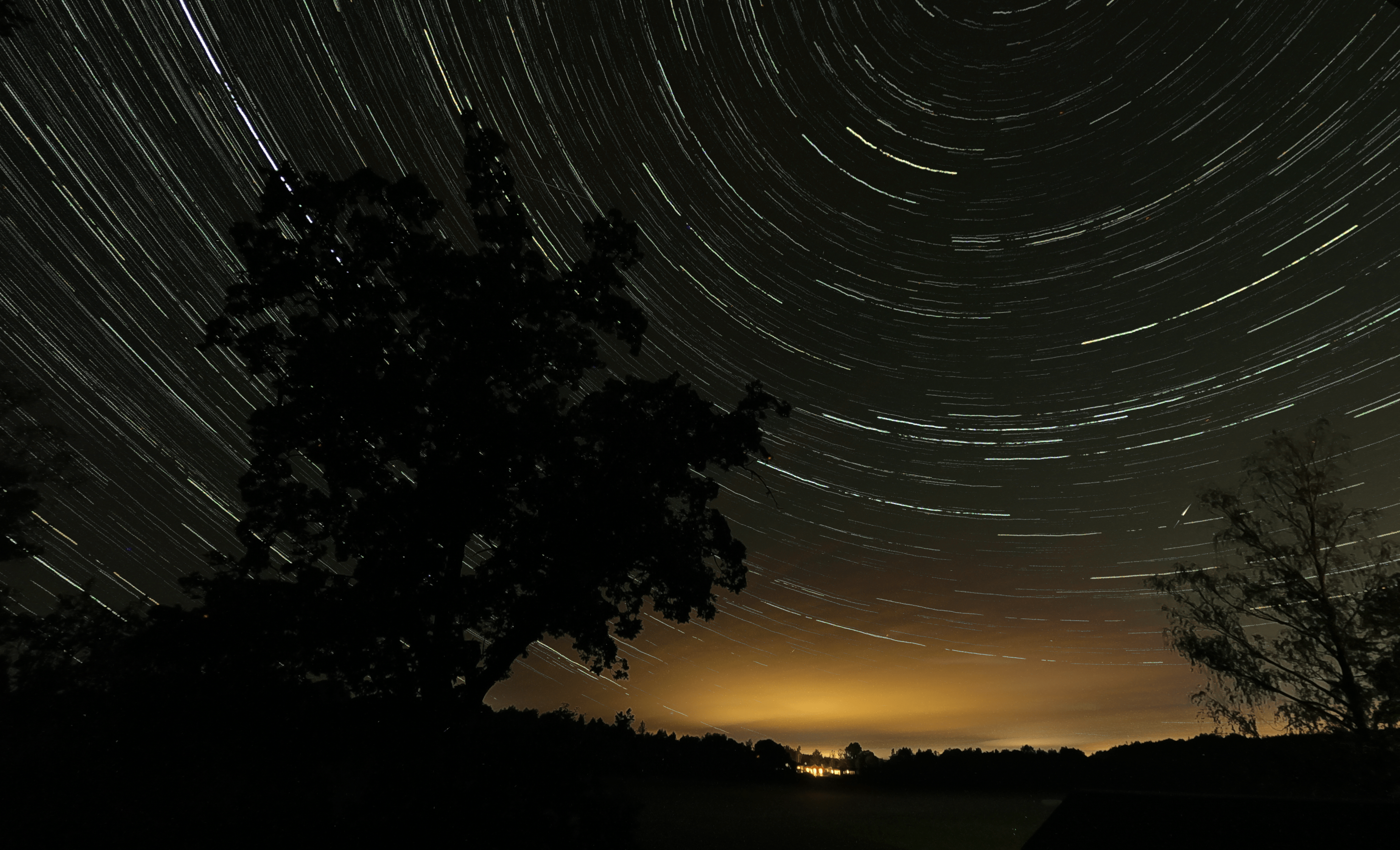
We all know that Earth is rotating, otherwise we wouldn't have nights and days. But did you know that enables taking spectracular images of the night sky? Here is a photo (or rather hundreds of images merged to one) that I took in August 2022 south of Stockholm, Sweden. Would you like to know how to take such an image yourself, please follow the tutorial at my github page: *to be inserted*